


“Nobody googles our machines.” I hear some version of that a lot from manufacturers, usually as the reason SEO isn’t for them. And they’re half right. Nobody googles your machine by name. But engineers google the problem it solves, the application it’s used for, and the standard it has to meet. All the time.
That’s what SEO for manufacturers is really about. Not chasing huge search volumes, but being the clearest answer when a small number of very relevant people go looking.
The short version: build pages around applications, problems and specs instead of product names, get the technical basics right, earn a few links from the places your industry actually reads, and judge it on qualified leads, not traffic.
Why SEO works for manufacturers (even if the numbers look small)
When you first look at keyword data for an industrial niche, it can feel a bit depressing. Thirty searches a month. Ten. Zero. Compared with consumer markets, that’s nothing.
But think about who’s behind those searches. Someone typing “hygienic conveyor for bakery” or “CIP cleaning time reduction” isn’t browsing for fun. They have a line to fix, a project to spec or a supplier to replace. A handful of those visitors a month can be worth more than thousands of random ones.
There are two more things working in your favour. Competition is often weak, because many industrial websites are still built around brochures and PDFs. And good pages keep working for years, long after a trade show budget is spent. On top of that, more and more buyers ask ChatGPT or Google’s AI Overviews for a first shortlist. The 6sense B2B Buyer Experience Report 2025 found that 94% of buyers use AI tools during their buying process, and those tools lean heavily on the same clear, specific content that ranks in Google.
Keyword research for industrial companies
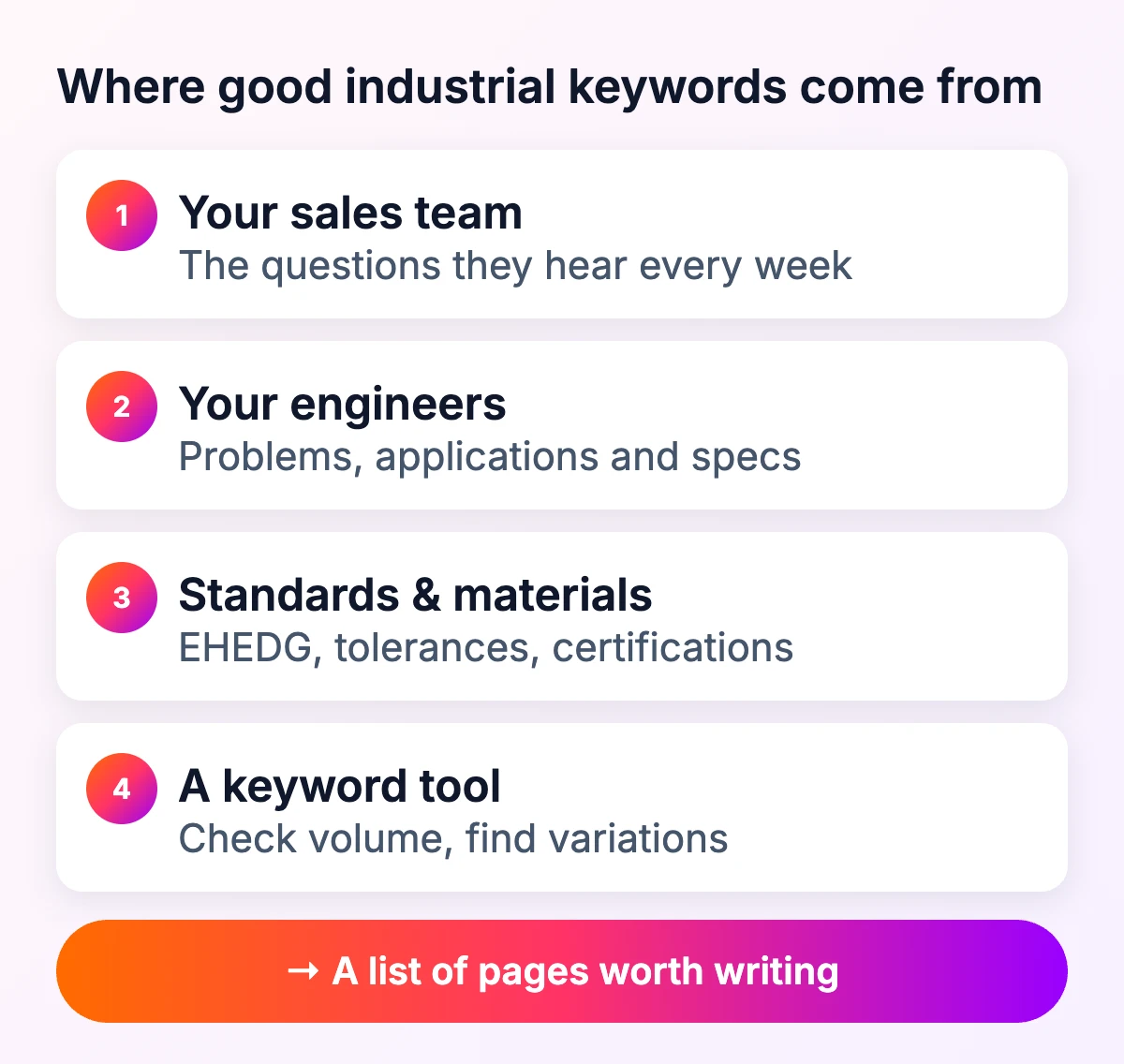
Keyword tools are useful, but they’re not where I’d start. I’d start with your sales team and your engineers. What do customers ask before they buy? Which problems do they describe? Which standards, materials or tolerances come up? Those questions are your best keywords, whether a tool shows volume for them or not.
At one show, several visitors kept asking the same technical question. That question later became the basis for a blog and a landing page, because it was clearly something the market was actively looking for.
Lot, Lum Collective
Then use a tool like Semrush to check volumes, find variations and see what competitors rank for. A few things I’ve learned doing this for industrial clients (and for our own site):
- Don’t dismiss zero-volume keywords. Tools often can’t measure very niche searches. If your customers ask the question, someone is searching for it.
- Look for problems, applications and specs, not just product categories.
- Check every language separately. When we researched our own site, “manufacturing marketing” in English turned out to be “marketing industrial” in Spanish, with completely different search behaviour. Translating keywords word for word would have missed it.
- Watch the intent. Some industrial keywords are full of people looking for market research reports or jobs, not suppliers. Check what actually ranks before you write.
The pages that rank (and sell)
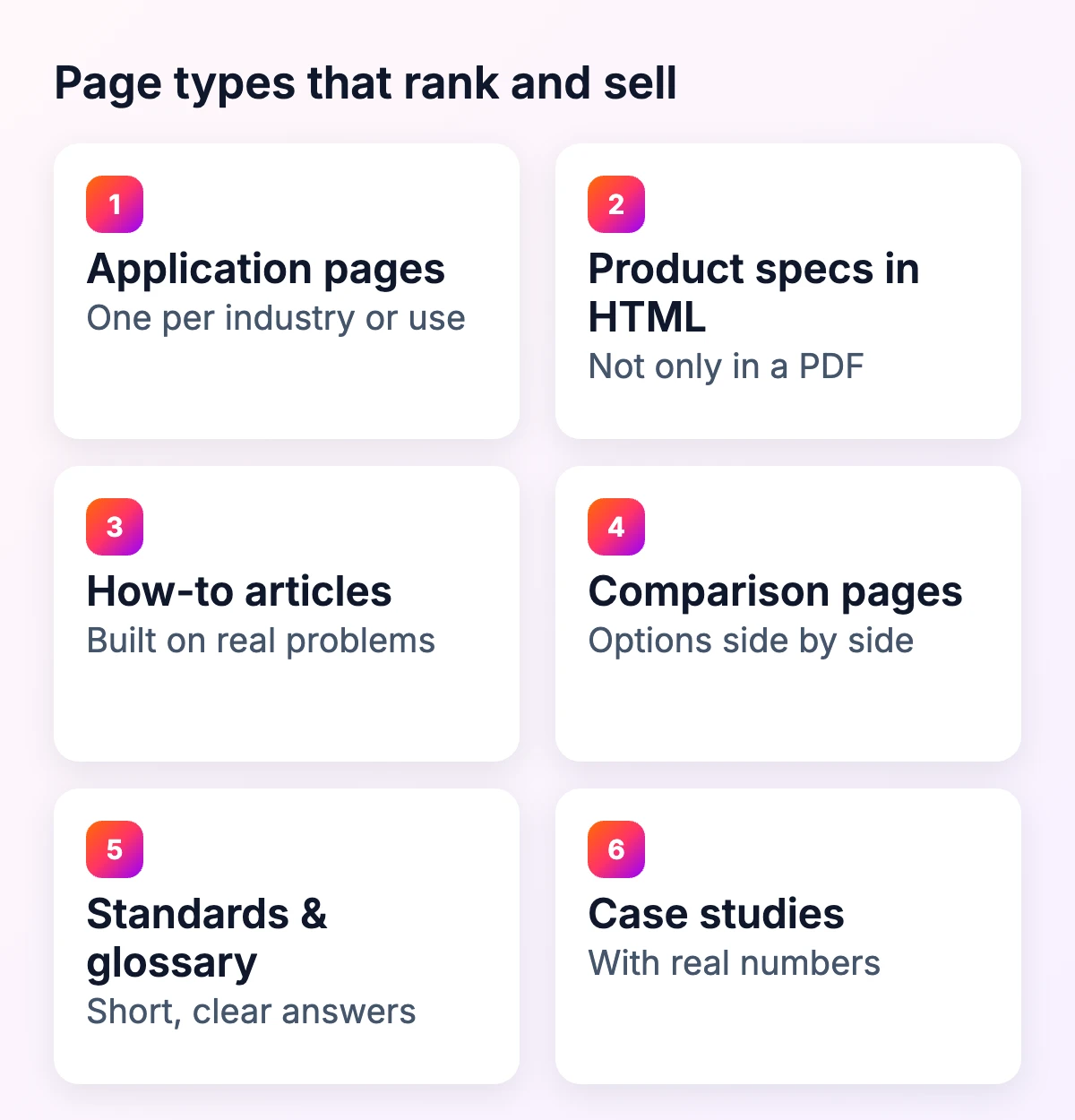
In my experience, these are the page types that do the heavy lifting for manufacturers:
- Application pages: one page per application or industry you serve, explaining the problem, your solution and the proof.
- Product pages with real specs in HTML: not just a PDF link. Google can read a PDF, but it ranks proper pages much better, and buyers on a phone will thank you.
- Problem and how-to articles: “how to reduce changeover time”, “what to check when choosing a filling machine”.
- Comparison pages: technologies, materials or approaches side by side. Buyers search for these when they’re close to deciding.
- Standards and glossary pages: short, clear explanations of the standards and terms your buyers deal with.
- Case studies with numbers: they rank less often, but they convert the people who do find you.
Write them for people first. Google’s own guidance on creating helpful content says as much, and for technical buyers it’s doubly true: they can smell filler from a mile away. How to actually produce these pages, with busy engineers, is in content marketing for manufacturers.
Technical SEO basics manufacturers often miss
You don’t need to become a developer, but a few technical things come up again and again on industrial websites:
- Everything important lives in PDFs. Put the key information on the page as well.
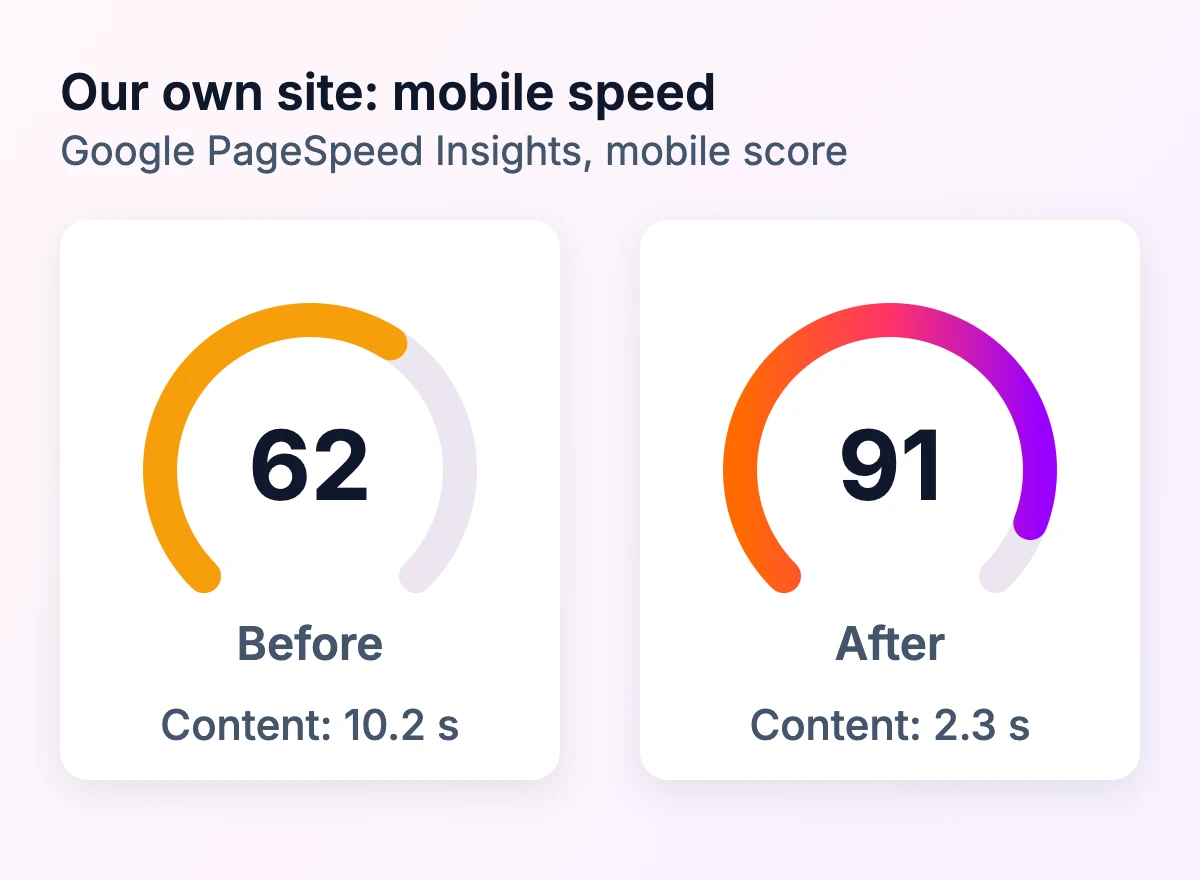
- Heavy, slow pages. Big product photos and sliders make sites slow, especially on mobile. When we fixed this on our own website, mobile performance in Google PageSpeed went from 62 to 91, and the main content now loads in about 2.3 seconds instead of more than 10.
- Multiple languages done halfway. If you sell in several countries, each language needs its own URL and proper hreflang tags, so Google shows the right version.
- Product catalogues that create endless duplicate pages through filters and parameters.
- No structured data. Organisation, product and FAQ markup help search engines (and AI tools) understand who you are and what you offer.
- Nobody looks at Search Console. It’s free and it tells you exactly which searches you already appear for.
Links and authority in industrial niches
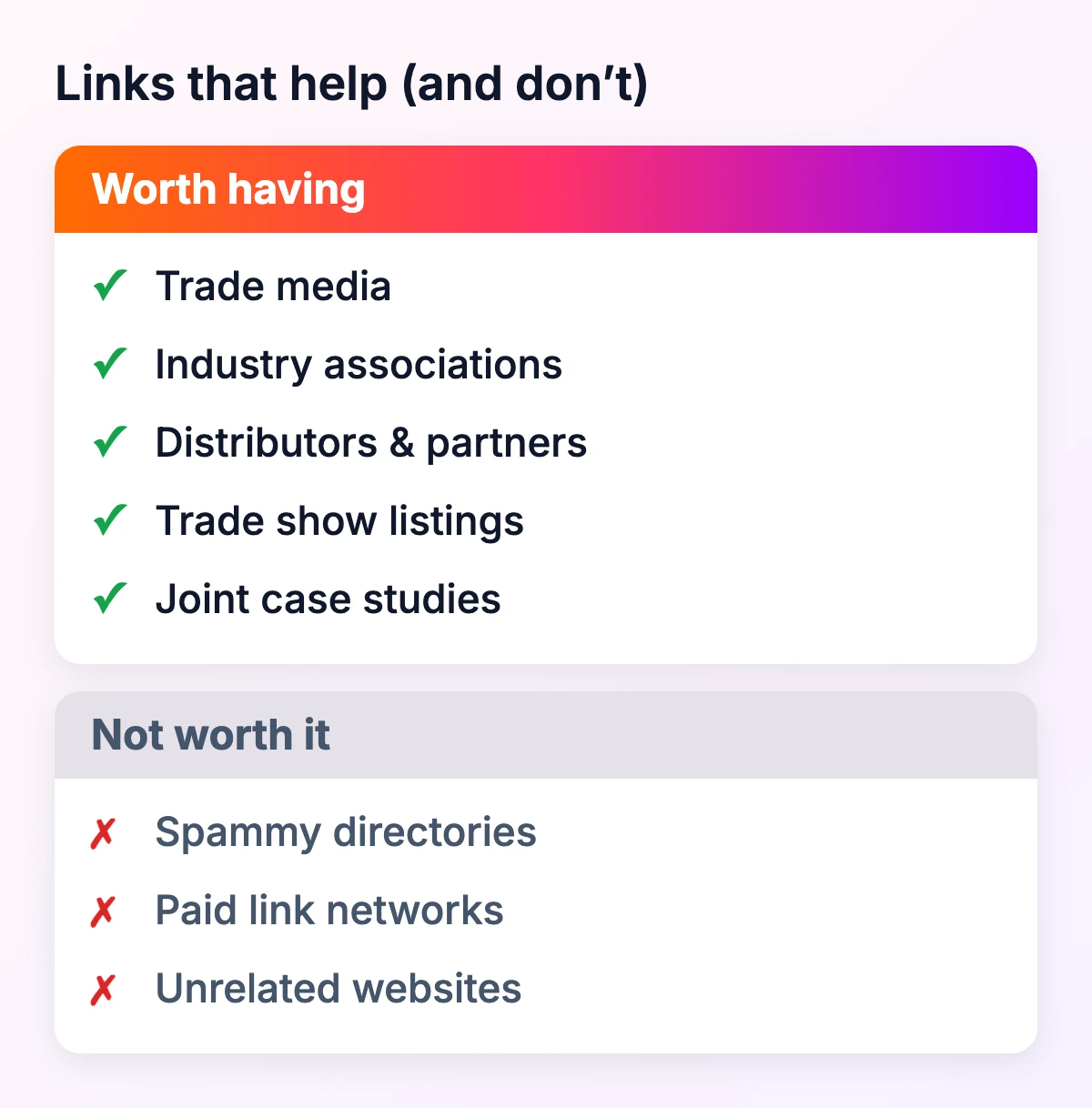
Links still matter, but in industrial markets you don’t need hundreds. You need a few from places your industry trusts: trade media, industry associations, distributors and partners, trade show exhibitor listings, universities or research centres you work with, and customers willing to feature a joint case study.
And be careful with cheap link offers. When I first checked our own site in Semrush, almost all of our backlinks came from spammy directories we’d never asked to be on. They don’t help, and in the worst case they hurt. Ten good links from your industry beat a thousand from nowhere.
Want to know what your buyers are searching for? We do SEO for B2B manufacturers, starting with keyword research in every language you sell in. See how we work or get in touch.
SEO and AI search
The good news: you don’t need a separate strategy for ChatGPT and AI Overviews. The same things that help you rank (clear, specific pages, consistent company information, mentions in trusted sources) are what these tools pick up on. I’ve written more about it in how to get your B2B company recommended by ChatGPT and AI search.
How long does it take, and what should you measure?
Honestly? Usually six to twelve months before it really gets going, sometimes longer for a new website. For one food technology client, SEO-led content, expert interviews and clearer landing pages grew organic visibility by 68% in nine months (here’s the case study). More important than the percentage: they started showing up for the technical problems their buyers were actually searching for.
Measure the things that matter to sales: impressions and clicks for your application and problem keywords in Search Console, enquiries from organic search, and the pipeline those enquiries create. Rankings for your own company name don’t count.
If you’re in food or ingredients
Food equipment and ingredient suppliers have a few extra opportunities: hygienic design and standards such as EHEDG, food safety documentation, and very specific applications per product category. I go into those in SEO for food processing and packaging equipment suppliers.
Mistakes I see a lot
- Building the website around the product catalogue instead of the problems customers search for.
- Putting all the useful information in PDFs.
- Translating keywords instead of researching each market.
- Buying links, or ignoring the spammy ones that show up on their own.
- Judging SEO on traffic or rankings for the company name.
- Giving up after three months.
Where to start
Ask your sales team for the twenty questions they hear most. Check in Search Console what you already show up for. Then write one really good application page for your most important market. That’s a better first month than any technical audit. For how SEO fits with the rest of your marketing, see our industrial marketing strategy in 8 steps, lead generation for manufacturers, and the overview in marketing for manufacturing companies.
Frequently asked questions
Yes. Search volumes in industrial niches are small, but the people searching for specific applications, problems and specs are usually close to a buying decision, and competition is often weaker than in other sectors.
Start with the problems, applications, specifications and standards your customers ask about, not just your product names. Ask your sales team and engineers for the questions they hear most, then check volumes and variations in a keyword tool.
Usually six to twelve months before results really build up, sometimes longer for a new website. Good pages then keep bringing in relevant visitors for years.
A few good ones, yes. Links from trade media, industry associations, distributors, partners and trade show listings matter far more than large numbers of links from unrelated sites.
Yes. AI tools draw on the same clear, specific content and trusted mentions that help you rank in Google, so good SEO also improves your chances of being recommended in AI answers.