

If I had to pick one social platform for a manufacturer, it would be LinkedIn. Not because it’s exciting. Because it’s where production managers, quality people, engineers and buyers hang out, with their job titles in plain sight.
Still, a lot of manufacturers’ LinkedIn looks the same: a company page posting product photos and trade show announcements to a few hundred followers, most of them colleagues. I’d do it differently. Below is the part of social media marketing for manufacturing companies I think is worth your time, and the bits I’d skip.
Your company page isn’t the main event
Company pages matter. People check them, and you need one to run ads. On their own, though, they don’t travel far. Posts from real people usually do better, especially people with something specific to say.
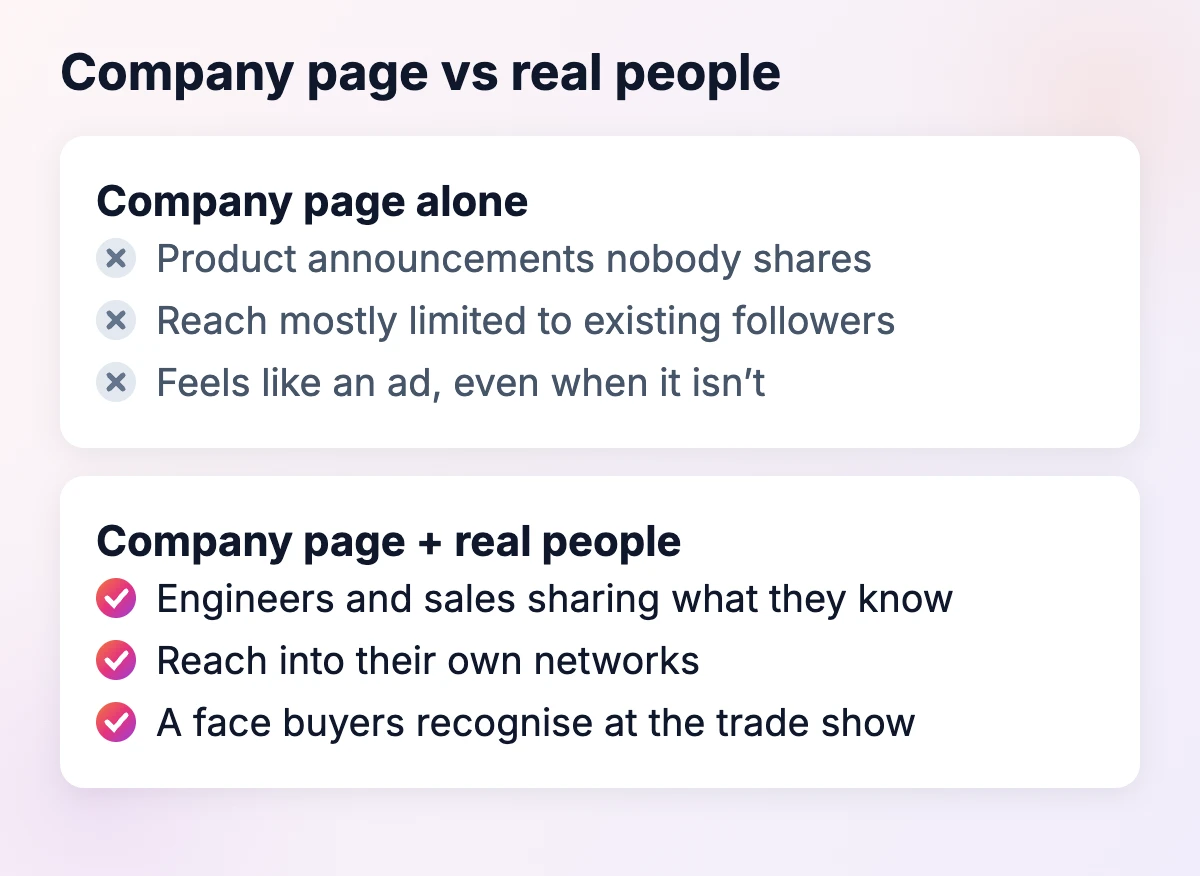
Engineers are often the best voices and the hardest to convince. Nobody wants to become an “influencer”, which is fair. I’d ask for something much smaller: one post a month about something they actually know. Marketing can help write it. It still has to sound like them.
What to post (when you think you’ve got nothing to say)
Manufacturers always have more to say than they think. The shift is from announcing things to explaining them.
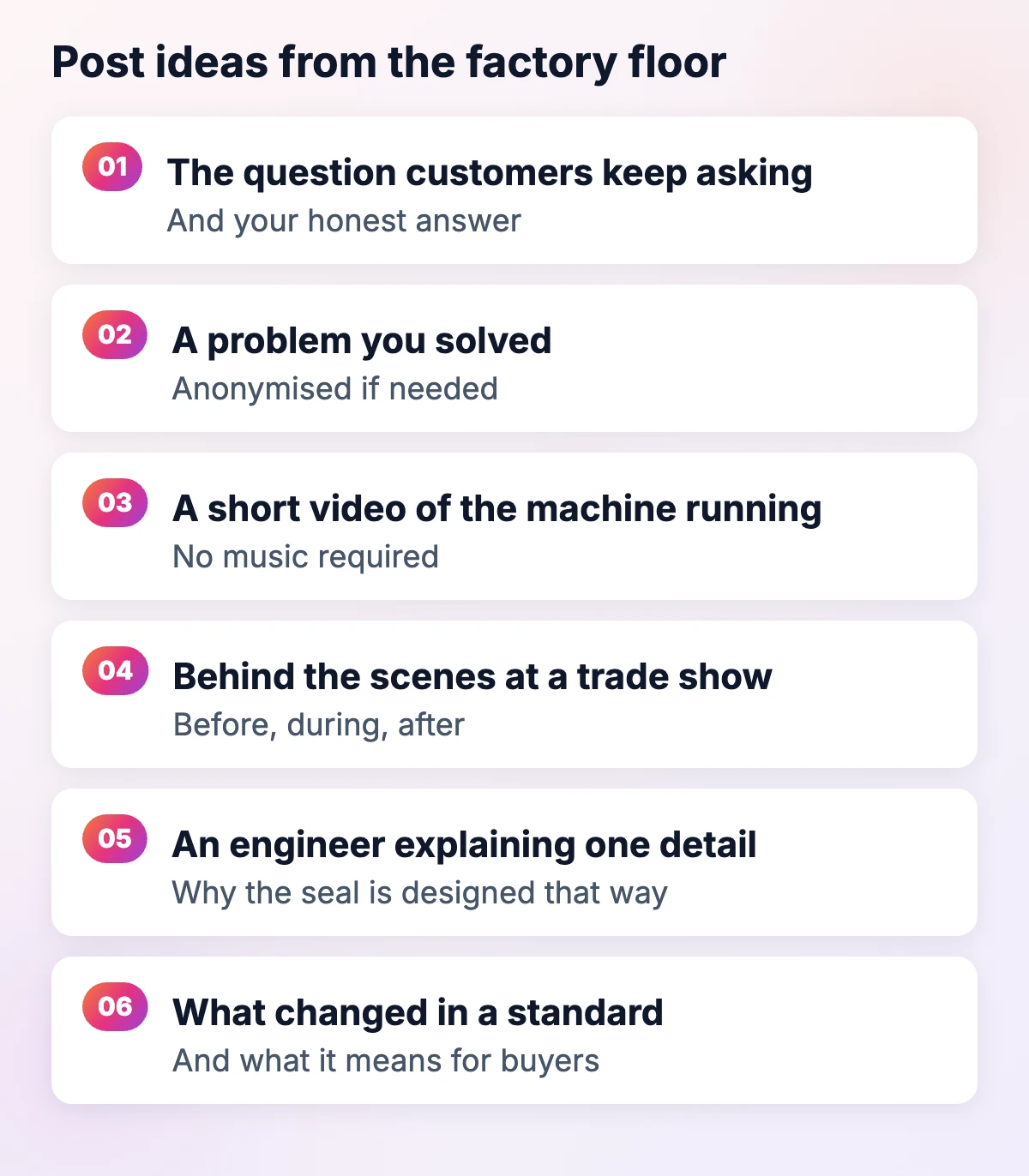
The first one is my favourite. If customers keep asking the same question, that’s a post, and probably a blog and a landing page too. At one trade show, visitors kept asking the same technical question, and it ended up as the basis for both.
And don’t over-polish. A slightly wobbly phone video of the machine running often gets more attention than the glossy brand film. Not always. Often.
LinkedIn ads: where it gets precise
Organic posts build familiarity. Ads let you reach the exact roles you need, in the industries and countries you sell to. Clicks aren’t cheap compared with other platforms, but in B2B manufacturing you’re paying to reach a small, very specific group of people, and that’s kind of the point.
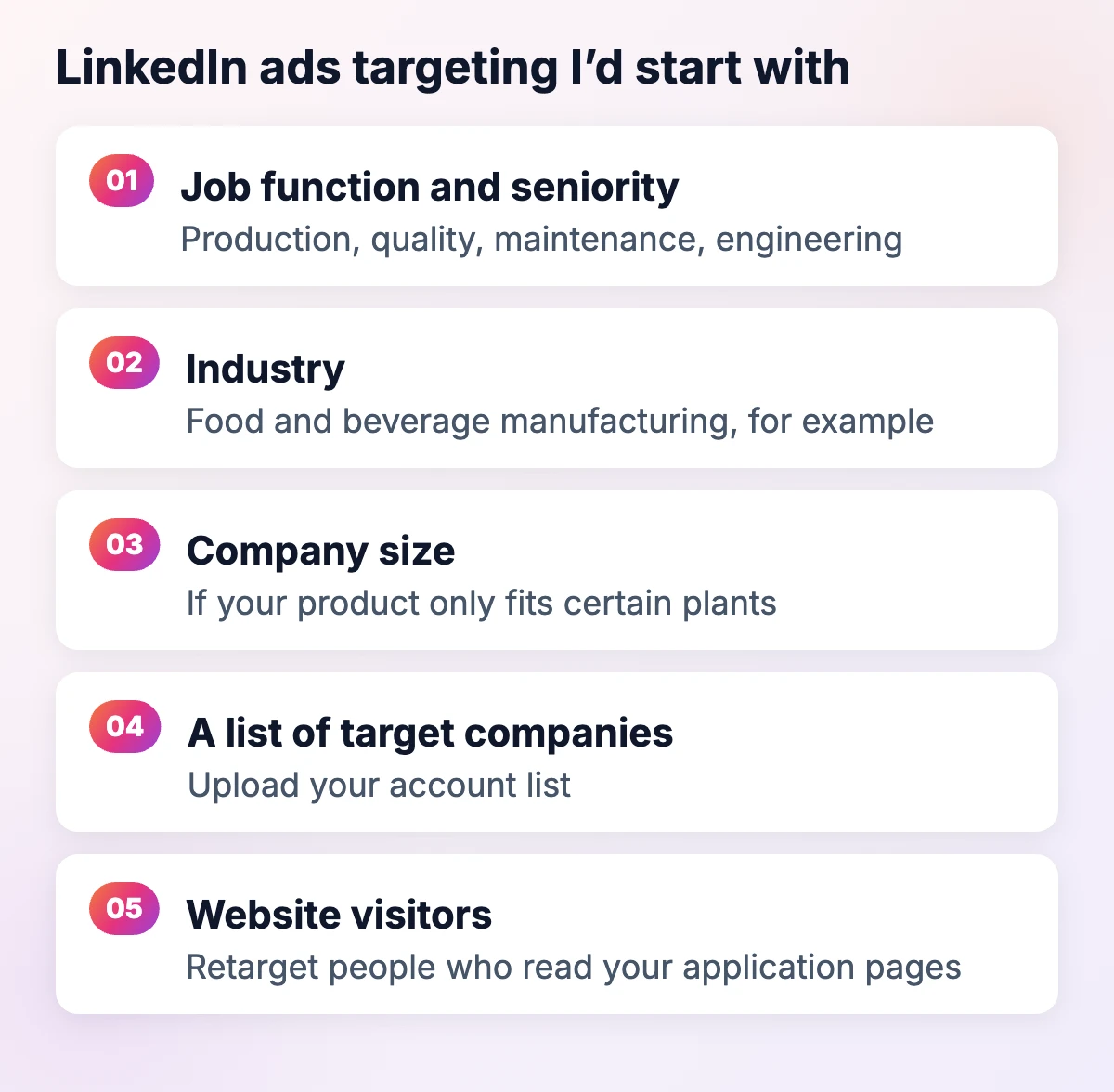
Send people somewhere useful, not to your homepage: an application page, a technical guide, a short comparison. Ungated if you can. If you’re testing a new export market, the same setup works per country. I go into that in the export content marketing checklist.
What it looked like for one client
For a European food innovation company, the problem wasn’t a lack of clicks. Earlier campaigns brought in plenty, just from the wrong people. We started with their sales team: which companies, which markets, and who gets involved when someone evaluates a new ingredient (R&D, product development, applications, procurement). That became a set of tightly defined LinkedIn audiences.
Then we rewrote the ads around specific needs, like texture and stability or reformulation, instead of the technology itself, and built landing pages that matched each topic. Budget moved away from ads that got clicks but no follow-up.
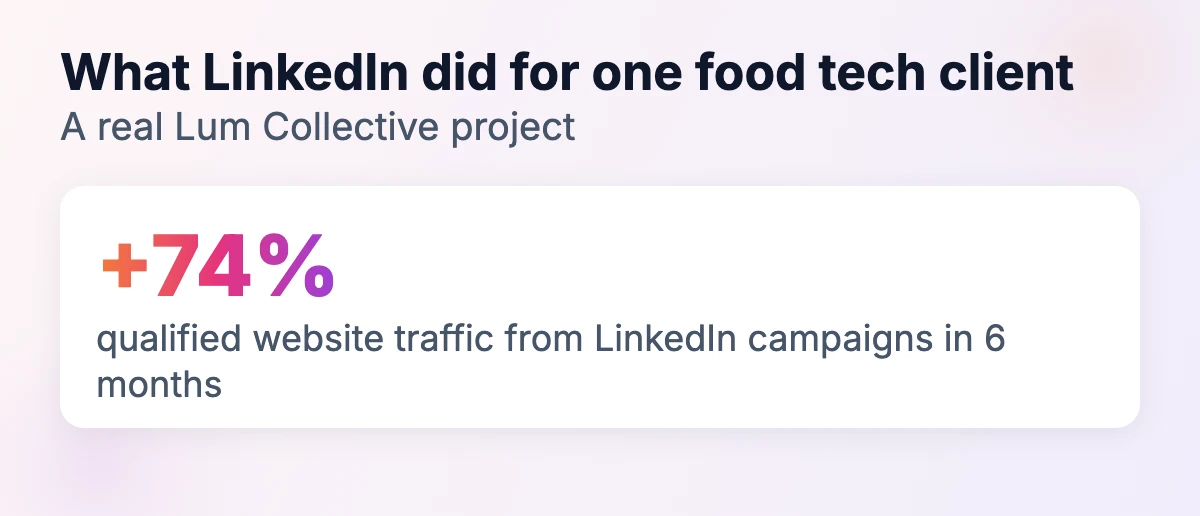
Over six months, qualified website traffic went up 74%. Engaged sessions from paid campaigns rose 41%, cost per engaged visitor dropped 27%, and priority application pages got 3.2 times more visits. The full story is in the food tech LinkedIn ads case study. Qualified is the important word there, by the way. Lots of clicks from students and competitors doesn’t help anyone.
What I’d skip
- Posting every day because someone said the algorithm likes it. Once or twice a week with something worth reading beats daily filler.
- Engagement pods and “Agree?” posts. People in your industry notice.
- Automated connection requests with a sales pitch in the first message. Please don’t.
- Measuring success in followers. I’d look at visits from target companies, clicks to your site and enquiries.
Fitting LinkedIn into the bigger plan
LinkedIn works best when it’s tied to everything else. The trade show: invite people before, share what happened after. Your content: every blog post is two or three LinkedIn posts. Sales: who should connect with whom after a meeting. It’s one piece of the wider manufacturing marketing picture, and if you’re writing next year’s plan, the one-page marketing plan template has a spot for it.
Frequently asked questions
For most B2B manufacturers, yes. It’s the platform where you can reach production, quality, engineering and procurement people by job title and industry. It works best combined with useful content and real people posting, not just a company page.
Once or twice a week from the company page is plenty, as long as each post has something useful in it. Posts from employees, even once a month each, often add more reach than extra company posts.
It varies a lot by audience, country and competition. Clicks are usually more expensive than on other social platforms, but the B2B targeting is much more precise. Start with a small test budget and judge it on qualified traffic and enquiries, not clicks.
Answers to questions customers keep asking, problems you’ve solved, short videos of equipment running, trade show behind-the-scenes, explanations of technical details and changes in standards. Explaining beats announcing.
Want LinkedIn to bring in more than likes? See how Lum Collective handles social media, or get in touch.