


Inbound marketing has a bit of a reputation problem in industry. For some people it means “write lots of blog posts and wait”. For others it’s an expensive software subscription that nobody really uses after the first month. Neither is what I mean.
The idea behind it is simple, and it actually suits manufacturers better than most sectors: be useful and easy to find at the moment buyers start looking, make the next step obvious, and stay in touch while they make up their minds. If you do that well, a good part of your pipeline starts coming to you.
The short version: attract the right people with pages that answer real questions, give them easy next steps (not “contact us”), keep them warm with a few useful emails, and hand serious leads to sales the same day.
What inbound marketing means for a manufacturer
In plain terms, inbound marketing for manufacturers is everything you do online so that buyers find you, rather than you finding them. Some people call it online marketing or internet marketing for manufacturers. The labels matter less than the four parts that make it work:
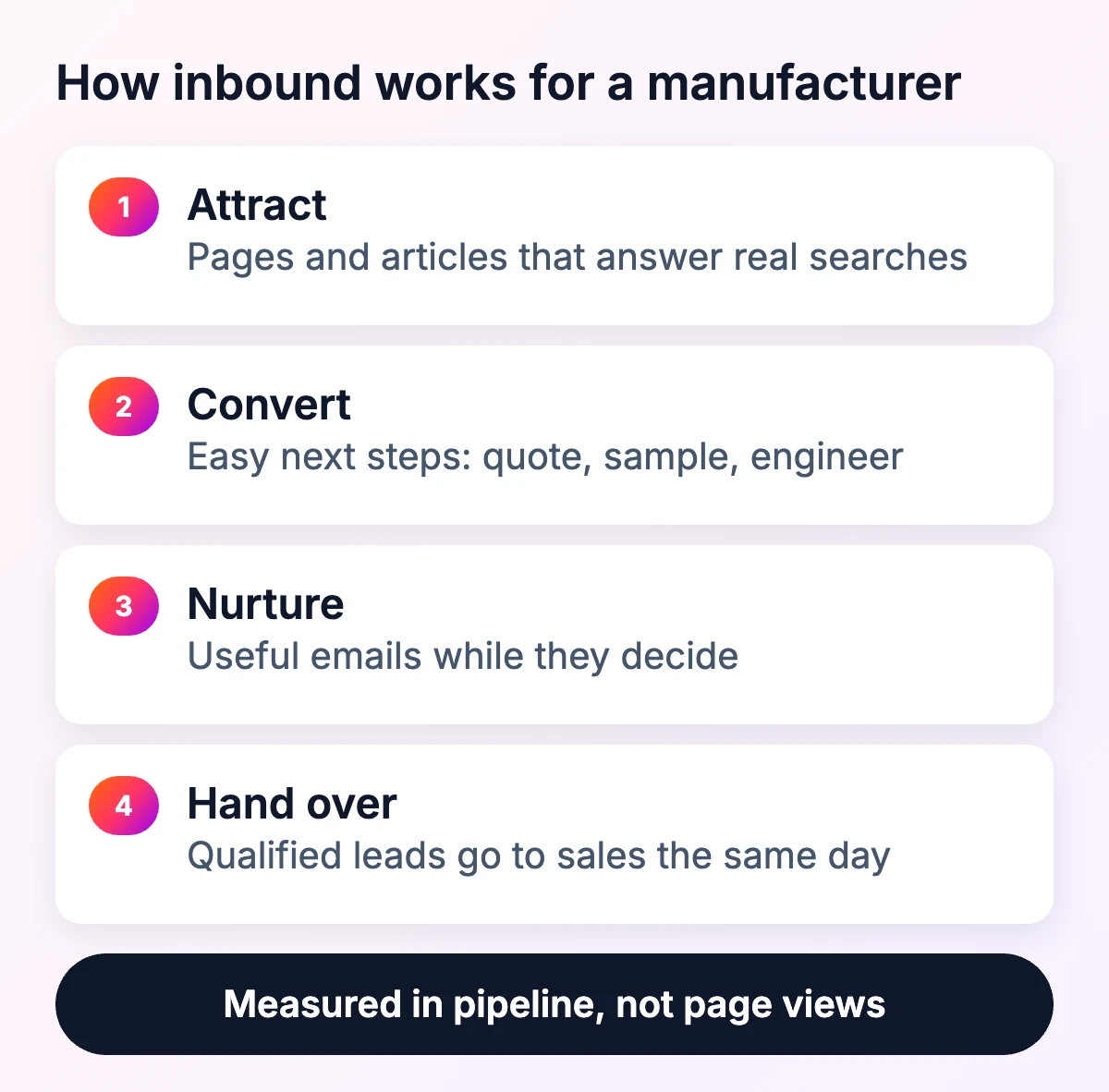
None of these parts is complicated on its own. The magic, if there is any, is in connecting them, so that someone who finds an application page in March is still hearing from you in June and ends up in a sales conversation in September.
Inbound or outbound? Usually both
I sometimes get asked whether inbound “replaces” trade shows, cold outreach and sales reps. It doesn’t. It complements them.
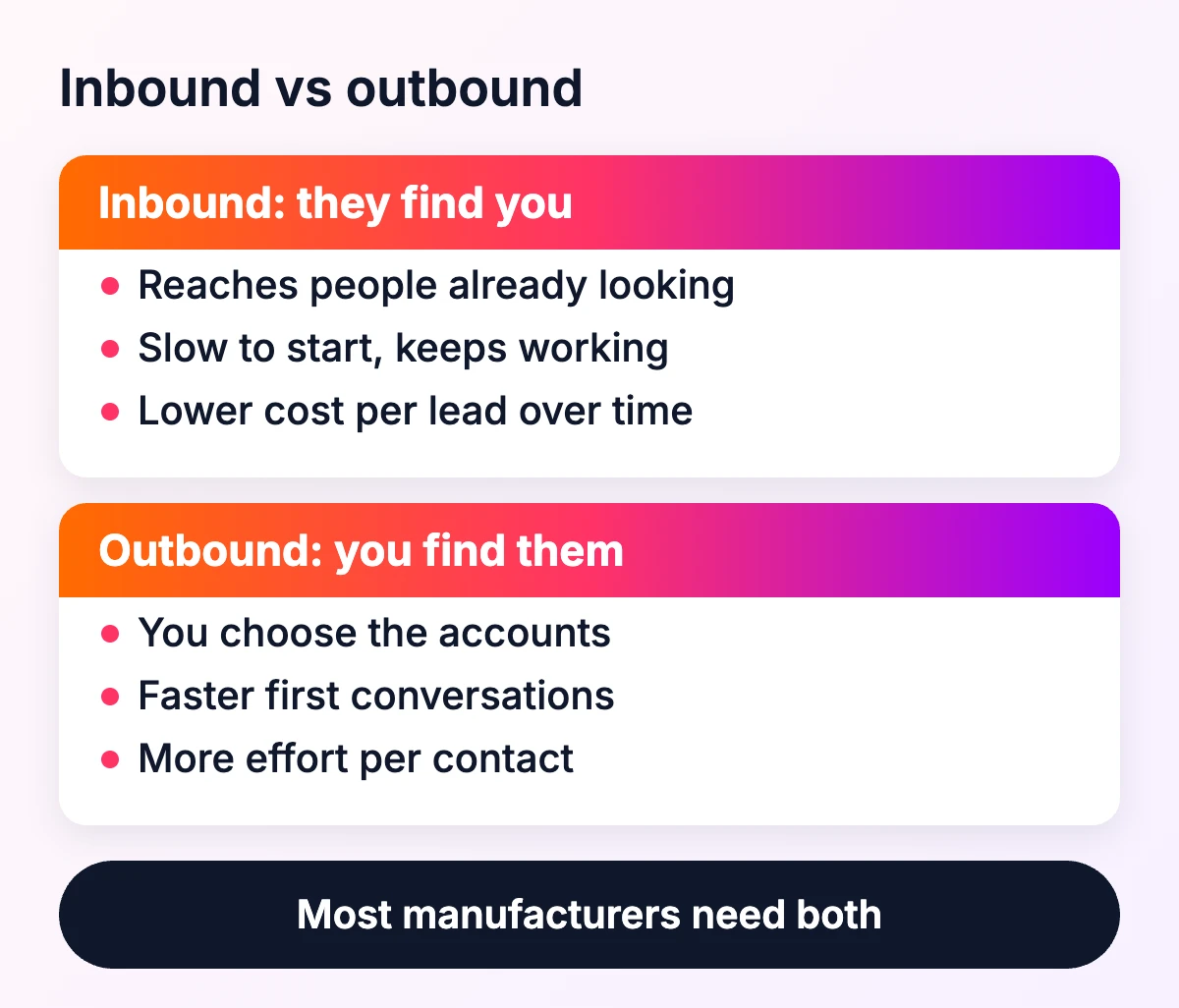
Inbound is great for reaching people who are already looking, and it gets cheaper per lead over time. Outbound, such as targeted LinkedIn campaigns, direct outreach to a list of key accounts or booking meetings before a trade show, lets you reach the companies you really want before they start searching. Most of the manufacturers I work with need a bit of both. I wrote more about the outbound side in lead generation for manufacturers.
Attract: be there when they search
This is where SEO and content come in. Engineers search for problems, applications and specs, so the pages that attract the right people are built around exactly that: application pages, how-to articles, comparison pages and spec sheets in plain HTML. I won’t repeat everything here; the details are in SEO for manufacturers and content marketing for manufacturers.
In B2B there are usually several touchpoints before someone buys. But when a food technology client started showing up for the specific technical problems their customers were searching for, marketing was already doing part of the sales work before the first conversation.
Lot, Lum Collective
Convert: make the next step obvious
This is the part most industrial websites get wrong. Someone has read your application page, they’re interested, and the only option is a generic “Contact us” form with eight fields. Most people just leave.
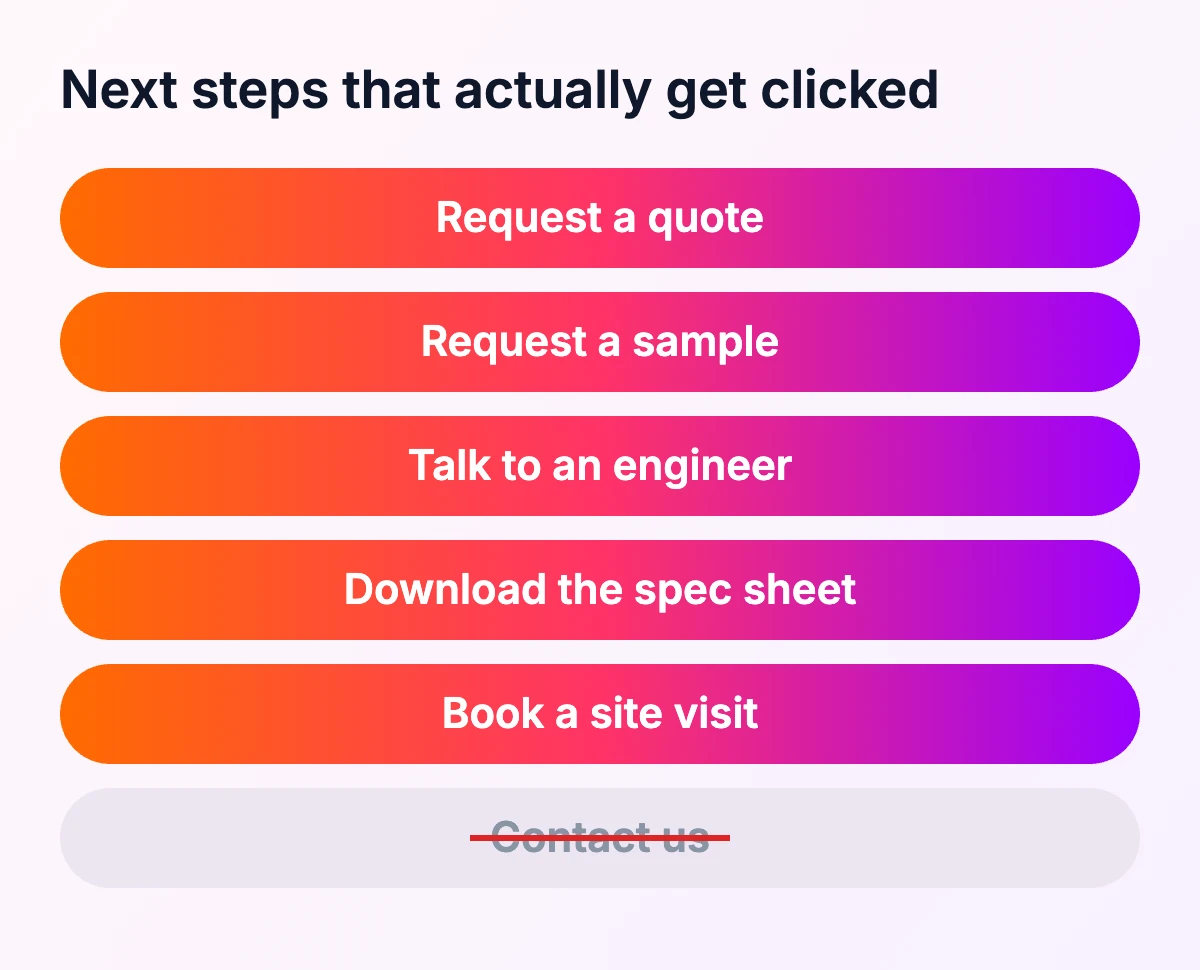
Offer next steps that match where the buyer is: a quote, a sample, a conversation with an engineer, a site visit. Keep forms short (name, company, email and one question is usually enough). And please, don’t put basic spec sheets behind a form. If someone is seriously considering your product, making them hand over their details just to see technical information is friction, not lead generation. Ask for details when there’s a real exchange, like a quote or a sample.
Nurture: stay useful while they decide
Industrial buying decisions take months. Most people who find you aren’t ready to talk to sales yet, and that’s fine. What you want is for them to remember you when they are. A short, useful email sequence does that without being pushy.
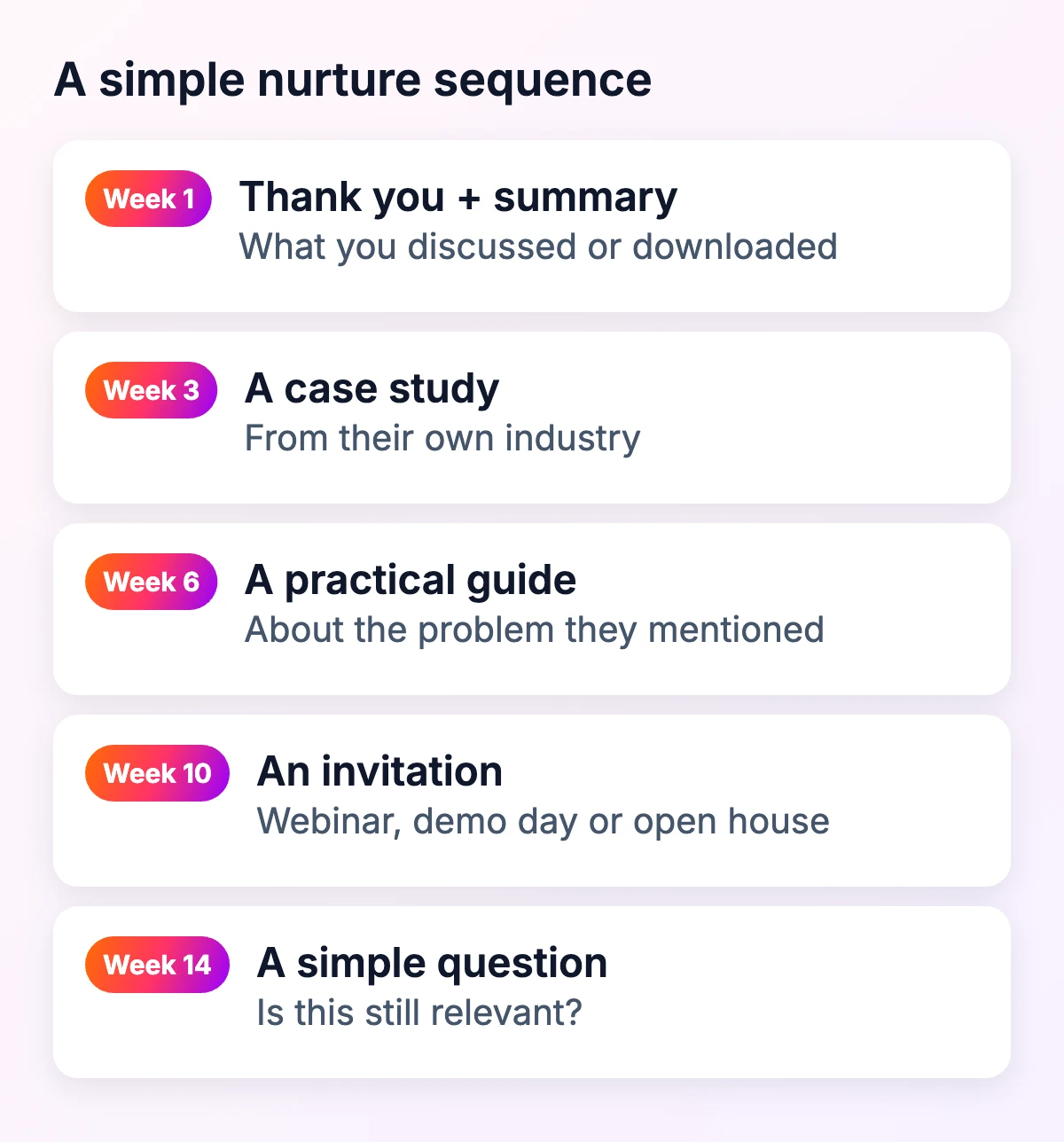
It doesn’t need to be fancy. For a food processing technology company we worked with, the nurture emails had an average open rate of 46% (here’s the case study), simply because they were relevant to the people receiving them. One practical note: in Europe, only add people to marketing emails if they agreed to it. GDPR applies to B2B contacts too.
Hand over: get serious leads to sales fast
Inbound only pays off if good leads reach sales quickly. Agree with your sales team what a qualified lead looks like, score leads on fit and behaviour in your CRM, and make sure the hot ones go to a person the same day. Research published in Harvard Business Review found that companies contacting leads within an hour were far more likely to qualify them than those who waited. The full process, including a simple scoring example, is in lead generation for manufacturers.
Do you need special software?
Not to start. You need a CRM your sales team actually uses, website forms that send leads into it, an email tool, and analytics that show where leads come from. All-in-one marketing platforms can be useful once you have a steady flow of leads and content, but buying one on day one is a classic way to spend a lot and use 10% of it.
Want inbound marketing that ends up in sales conversations? We help B2B manufacturers connect SEO, content, email and their CRM into one simple system. See how we work on growth strategy or get in touch.
How long does it take, and what should you measure?
Inbound builds up. Expect the first real results after six to twelve months, mostly because search and content take time. Conversion fixes (better next steps, shorter forms, faster follow-up) can show results much sooner, sometimes within weeks.
Measure the whole chain, not just the top: visits to your application and problem pages, the share of visitors who take a next step, how many of those become qualified leads, and how much pipeline they create. If you can only track one number, track qualified leads from organic search and email, and what they turn into.
Mistakes I see a lot
- Publishing content with no next step on the page.
- “Contact us” as the only option, with a long form.
- Gating spec sheets and basic technical information.
- No follow-up for people who downloaded something or asked a question.
- Buying a big marketing platform before having a process.
- Treating inbound and outbound as competitors instead of teammates.
Where to start
Pick your three most visited product or application pages and add one clear, specific next step to each. Shorten your forms. Set a same-day follow-up rule. Then start building the content and SEO side from there. For the bigger picture, see our industrial marketing strategy in 8 steps and our guide to marketing for manufacturing companies.
Frequently asked questions
It’s the combination of activities that helps industrial buyers find you online and get in touch: useful pages that rank in search, clear next steps on your website, nurture emails while buyers decide, and a fast handover of qualified leads to sales.
Yes, especially because industrial buyers do most of their research online before contacting suppliers. It works best combined with outbound activities such as trade shows, targeted LinkedIn campaigns and account-based outreach.
Inbound attracts people who are already looking, through search, content and email. Outbound means you reach out first, for example through targeted ads, direct outreach or pre-booked trade show meetings. Most manufacturers need both.
Not to start. A CRM your sales team uses, website forms connected to it, an email tool and basic analytics are enough. A bigger platform can make sense later, once you have a steady flow of content and leads.
Conversion improvements can show results within weeks, but search and content usually take six to twelve months to build up. Plan for at least a year and measure qualified leads and pipeline, not just traffic.